Showing posts with label Korea (KOR). Show all posts

Wednesday, 11 March 2026

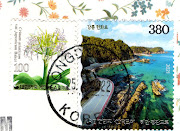
속초시 - Sokcho


 설악산 국립공원의 웅장한 봉우리 사이에 자리 잡은 신흥사는 한국에서 가장 중요한 사찰 중 하나입니다. 7세기에 처음 창건된 이 사찰은 여러 차례의 파괴와 재건을 거치면서도 깊은 역사적 연속성을 간직하고 있습니다. 특히 14미터가 넘는 거대한 청동 불상인 '통일대불'은 한반도의 평화로운 통일을 염원하는 상징으로 매우 인상적입니다. 방문객들은 맑은 계곡물 위로 난 아름다운 다리를 건너며 정신적인 세계로 들어가는 경험을 하게 됩니다. 정교하게 장식된 법당과 화려한 단청은 조선시대의 고전적인 미학을 잘 보여줍니다. 대자연에 둘러싸인 이곳은 고요한 분위기를 선사하며 등산객과 신도들 모두에게 마음의 평온을 찾게 해줍니다.


Nestled within the breathtaking peaks of Seoraksan National Park, Sinheungsa Temple stands as one of South Korea's most significant Buddhist landmarks. Originally built in the 7th century, the site radiates a profound sense of historical continuity despite numerous destructions and reconstructions. A major highlight is the monumental bronze statue of the "Great Unification Buddha," which symbolizes the hope for a peaceful reunification of the Korean Peninsula. Visitors reach the temple by crossing a charming bridge over a crystal-clear mountain stream, marking the transition into a spiritual realm. The intricately decorated wooden halls and vibrant paintings beautifully reflect the classical aesthetics of the Joseon Dynasty. Surrounded by untouched nature, the temple offers an atmosphere of tranquility that invites hikers and worshippers alike to find inner peace.


Der Sinheungsa-Tempel liegt malerisch eingebettet in den schneebedeckten Gipfeln des Seoraksan-Nationalparks und gilt als einer der bedeutendsten buddhistischen Orte Südkoreas. Ursprünglich im 7. Jahrhundert erbaut, strahlt die Anlage trotz mehrfacher Zerstörungen und Wiederaufbauten eine tiefe historische Kontinuität aus. Besonders beeindruckend ist die monumentale, über 14 Meter hohe Bronzestatue des „Großen Einheits-Buddha“, die den Wunsch nach einer friedlichen Wiedervereinigung der koreanischen Halbinsel symbolisiert. Besucher erreichen den Tempel über eine charmante Brücke, die über einen klaren Gebirgsbach führt und den Übergang in die spirituelle Welt markiert. Die kunstvoll verzierten Holzhallen und die farbenfrohen Malereien spiegeln die klassische Ästhetik der Joseon-Dynastie wider. Inmitten der unberührten Natur bietet der Ort eine Atmosphäre der Stille, die Wanderer und Gläubige gleichermaßen zur inneren Einkehr einlädt.

Stamp:
USA: Compass rose

Thank you, Ethan 

Friday, 7 November 2025

Friday, 3 January 2025

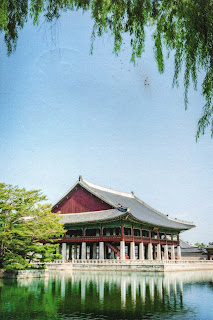
경복궁 - Gyeongbokgung Palace (Seoul)


경회루
경회루는 경복궁 내 연못 한가운데 인공섬 위에 세워진 2층 누각입니다. 조선 시대 왕궁의 연회와 외국 사신 접견 등에 사용되었으며, '행복한 모임의 궁'이라는 뜻을 지니고 있습니다. 조선 시대 왕과 백성의 화합을 상징하는 건축물로, 여러 차례 파괴와 중건을 거치며 오늘날까지 이어져 왔습니다. 아름다운 자연과 조화를 이루는 건축美를 자랑하며, 한국의 역사와 문화를 상징하는 중요한 문화유산입니다.

Gyeonghoeru (Royal Banquet Hall)
Gyeonghoeru is a two-story pavilion built on an artificial island in a pond within Gyeongbokgung Palace. It was used for royal banquets and receptions of foreign dignitaries during the Joseon Dynasty and has the meaning of "Palace of happy gathering". It is a symbolic building of harmony between the king and the people of the Joseon Dynasty, and has been passed down to the present day through several destructions and reconstructions. It boasts beautiful architecture in harmony with nature and is an important cultural heritage that symbolizes the history and culture of Korea.


Gyeonghoeru (Königlicher Bankette-Saal)
Gyeonghoeru ist ein zweistöckiger Pavillon, der auf einer künstlichen Insel in einem Teich im Gyeongbokgung-Palast errichtet wurde. Er wurde während der Joseon-Dynastie für königliche Bankette und Empfänge ausländischer Würdenträger genutzt und hat die Bedeutung „Palast der glücklichen Zusammenkunft“. Er ist ein symbolisches Gebäude der Harmonie zwischen dem König und dem Volk der Joseon-Dynastie und hat sich durch mehrere Zerstörungen und Wiederaufbauten bis in die Gegenwart erhalten. Der Palast besticht durch seine wunderschöne Architektur im Einklang mit der Natur und ist ein wichtiges kulturelles Erbe, das die Geschichte und Kultur Koreas symbolisiert.

Thank you, Kwon

Sunday, 23 June 2024

제주특별자치도 - Jeju Island


 제주특별자치도(濟州特別自治道)는 대한민국의 최남단에 위치한 섬이자 특별자치도로, 주요한 관광지로 알려져 있습니다. 제주도는 독특한 자연경관과 온화한 기후로 많은 관광객들이 찾는 명소입니다.


Jeju Special Self-Governing Province (濟州特別自治道) is the southernmost island and special autonomous region of South Korea, and is a major tourist destination. Jeju Island attracts many tourists with its unique natural scenery and mild climate.


Die Sonderprovinz Jeju (濟州特別自治道) ist die südlichste Insel und autonome Sonderregion Südkoreas und ein wichtiges Touristenziel. Die Insel Jeju lockt mit ihrer einzigartigen Natur und ihrem milden Klima viele Touristen an. 

Stamp:
Mail shark

UNESCO #1264bis:
Jeju Volcanic Island and Lava Tubes

 Thank you, Bomi

Saturday, 9 December 2023

북촌한옥마을 - Bukchon Hanok Village


 Bukchon Hanok Village is a neighbourhood in Jongno District, Seoul, famous for its narrow streets and restored traditional Korean houses, called "hanok".

 Bukchon Hanok Village ist ein Viertel im Bezirk Jongno in Seoul, das für seine engen Gassen und die restaurierten traditionellen koreanischen Häuser, "Hanok" genannt, bekannt ist.

 Stamp:
Chinese hawthorn

Köszi szépen, kedves Noémi

Saturday, 1 April 2023

이순신 - Admiral Yi


Admiral Yi Sun-Shin (1545 - 1598) was a Korean admiral and general famous for his victories against the Japanese fleet during the Imjin War in the Joseon Dynasty.

Admiral Yi Sun-sin (1545 - 1598) war ein koreanischer Admiral und General, der für seine Siege gegen die japanische Flotte während des Imjin-Krieges in der Joseon-Dynastie berühmt war. 

Stamps:
Mountain Hawthorn
Japanese Paradise Flycatcher

Thank you, Brian

Thursday, 25 August 2022

고창읍성 - Gochangeupseong Walled Town


The city walls of Gochangeupseong were built in 1453 during the reign of Joseon King Danjong to protect the city from foreign invaders. The walls were built by the local people using the available natural resources. The city wall, also called Moyangseong Fortress, played an important role in protecting the southern region. The walls are 4~6 meters high and 1,684 meters long, with three gates on the north, east and west walls, each protected by curved walls. There were 22 government buildings within the large area. Restoration work on the wall has been ongoing since 1976.

Die Stadtmauer von Gochangeupseong wurde 1453 während der Herrschaft des Joseon-Königs Danjong errichtet, um die Stadt vor ausländischen Eindringlingen zu schützen. Die Mauern wurden von der örtlichen Bevölkerung unter Verwendung der verfügbaren natürlichen Ressourcen errichtet. Die Stadtmauer, auch Festung Moyangseong genannt, spielte eine wichtige Rolle beim Schutz der südlichen Region. Die Mauern sind 4~6 Meter hoch und 1.684 Meter lang, mit drei Toren an der Nord-, Ost- und Westmauer, die jeweils durch gebogene Mauern geschützt sind. Innerhalb des großen Areals befanden sich 22 Regierungsgebäude. Die Restaurierungsarbeiten an der Mauer laufen seit 1976.

Stamps:
Astronomy of the Joseon Dynasty
Yugwa, Korean rice dessert

Thank you, Yoonjeong

Sunday, 10 October 2021

경복궁 - Gyeongbokgung


Gyeongbokgung Palace, built in 1395 in Seoul during the Joseon dynasty

Gyeongbokgung Palast, errichtet im Jahre 1395 in Seoul während der Joseon Dynastie

Stamps:
Tawny owl
Flag of South Korea

Thank you, Hajeong :)