Monday, 15 April 2024

St. Michaelis Kirche - St. Michael's Church


St. Michaelis
Die St. Michaelis Kirche, auch bekannt als der "Michel", ist eine der bekanntesten Kirchen in Hamburg und ein Wahrzeichen der Stadt. Sie wurde im 18. Jahrhundert im Barockstil erbaut und ist bekannt für ihren markanten Turm, der eine Höhe von 132 Metern hat und einen beeindruckenden Blick über Hamburg bietet.

St. Michael's
St Michael's Church, also known as the "Michel", is one of the most famous churches in Hamburg and a landmark of the city. It was built in the 18th century in the Baroque style and is known for its striking tower, which is 132 metres high and offers an impressive view over Hamburg.

Stamp:
Light house on Helgoland island

Cancellation:
Philately Hamburg

Danke, Burak

Ленинград - Leningrad


Смольный
Смольный — это историческое здание в Санкт-Петербурге, известное прежде всего как место, где в 1917 году располагался штаб большевиков во время Октябрьской революции. В это время Владимир Ленин, лидер большевиков, руководил революционными событиями из Смольного.

После революции здание Смольного использовалось как главное здание петроградской городской администрации и место проведения различных государственных мероприятий. В частности, здесь проходили заседания Всероссийского Центрального Исполнительного Комитета и другие важные события гражданской войны и революции.

В советский период в здании Смольного размещался Ленинградский совет народных депутатов и ряд других государственных и общественных организаций. Сейчас здание Смольного является одним из символов Санкт-Петербурга и продолжает использоваться как административное здание, где размещаются органы местного самоуправления.


Smolny
Smolny is a historic building in St. Petersburg, primarily known as the site of the Bolshevik headquarters during the October Revolution in 1917. During this time, Vladimir Lenin, the leader of the Bolsheviks, directed the revolutionary events from Smolny.

After the revolution, the Smolny building was used as the main building of the Petrograd city administration and as a venue for various state events. In particular, meetings of the All-Russian Central Executive Committee and other important events of the Civil War and Revolution were held here.

During the Soviet period, the Smolny building housed the Leningrad Soviet of People's Deputies and a number of other state and public organisations. Nowadays, the Smolny building is one of the symbols of St. Petersburg and continues to be used as an administrative building housing local government bodies.

Smolny
Smolny ist ein historisches Gebäude in St. Petersburg, das vor allem als Sitz des bolschewistischen Hauptquartiers während der Oktoberrevolution 1917 bekannt ist. Während dieser Zeit leitete Wladimir Lenin, der Anführer der Bolschewiki, die revolutionären Ereignisse von Smolny aus.

Nach der Revolution wurde das Smolny-Gebäude als Hauptgebäude der Petrograder Stadtverwaltung und als Veranstaltungsort für verschiedene staatliche Veranstaltungen genutzt. Insbesondere fanden hier die Sitzungen des Allrussischen Zentralen Exekutivkomitees und andere wichtige Ereignisse des Bürgerkriegs und der Revolution statt.

Während der Sowjetzeit beherbergte das Smolny-Gebäude den Leningrader Sowjet der Volksdeputierten und eine Reihe anderer staatlicher und öffentlicher Organisationen. Heute ist das Smolny-Gebäude eines der Wahrzeichen von St. Petersburg und wird weiterhin als Verwaltungsgebäude genutzt, in dem die lokalen Regierungsbehörden untergebracht sind.

Спасибо, Иван

Zagreb - Zágráb


 1. Zagrebačka Katedrala, 2. Crkva Svetog Marka, 3. Hrvatsko Narodno Kasalište, 4. Trg Bana Josipa Jelačića, 5. Katedrala, 6. Muzej za umjetnosti i obrt

1. Zágrábi Katedrális, 2. Sz. Márk Templom, 3. Horvát Nemzetiszínház, 4. Jelacsity bán tér, 5. Katedrális, 6. Művészeti Múzeum

1. Zagreb Cathedral, 2. St. Mark Church, 3. Croatian National Theatre, 4. Ban Jelacic Square, 5. Cathedral, 6. Museum of Arts and Crafts

1. Zagreber Dom, 2. St. Markus Kirche, 3. Kroatisches Nationaltheater, 4. Joseph Jelacic Platz, 5. Dom, 6. Museum für Kunst und Handwerk

Stamp:
Nature Park Telascica

Danke, Piu

Friday, 12 April 2024

München - Munich


1. Bavaria, 2. Wittelsbacher Brunnen, 3. Karlsplatz 4. Schloss Nymphenburg, 5. Frauenkirche, 6. Isarpartie, 7. Marienplatz mit Dom, 8. Theatiner und Frauenkirche, 9. Edelweis, 10. Deutsches Museum

Stamp:
1st stamp after WWII

Cancellation:
Airport Munich: First flight to Delhi

Danke, Anke

Valle Verzasca - Verzascatal - Val Verzasca - Verzasca Valley


 La Valle Verzasca
La Valle Verzasca è una pittoresca valle situata nella regione di lingua italiana della Svizzera, nota come Ticino. È rinomata per la sua straordinaria bellezza naturale, con acque turchesi e cristalline, scogliere frastagliate e incantevoli villaggi in pietra.
Una delle attrazioni più famose della Valle Verzasca è il Ponte dei Salti, un ponte romano a doppia arcata che attraversa il fiume Verzasca vicino al villaggio di Lavertezzo. Il ponte è un luogo molto amato dai turisti per scattare foto e godersi il paesaggio circostante.

Das Verzascatal
Das Verzascatal ist ein malerisches Tal in der italienischsprachigen Region der Schweiz, dem Tessin. Es ist bekannt für seine atemberaubende natürliche Schönheit mit kristallklarem, türkisfarbenem Wasser, zerklüfteten Felsen und charmanten Steindörfern.
Eine der berühmtesten Attraktionen des Verzascatals ist die doppelbogige römische Brücke Ponte dei Salti, die den Verzasca-Fluss in der Nähe des Dorfes Lavertezzo überspannt. Die Brücke ist ein beliebter Ort für Touristen, um Fotos zu machen und die malerische Umgebung zu genießen.

La val Verzasca
La val Verzasca est une vallée pittoresque située dans la région italophone de la Suisse, connue sous le nom de Tessin. Elle est réputée pour sa beauté naturelle étonnante, avec ses eaux turquoise cristallines, ses falaises escarpées et ses charmants villages de pierre.
L'une des attractions les plus célèbres de la vallée de Verzasca est le pont romain à double arche appelé Ponte dei Salti, qui enjambe la rivière Verzasca près du village de Lavertezzo. Le pont est un endroit populaire pour les touristes qui veulent prendre des photos et profiter du paysage.
 

The Verzasca valley
The Verzasca valley is a picturesque valley located in the Italian-speaking region of Switzerland, known as Ticino. It is renowned for its stunning natural beauty, with crystal-clear turquoise waters, rugged cliffs, and charming stone villages.
One of the most famous attractions in the Verzasca Valley is the double-arched Roman bridge called the Ponte dei Salti, which spans the Verzasca River near the village of Lavertezzo. The bridge is a popular spot for tourists to take photos and enjoy the scenic surroundings.

Vielen Dank, Maria

Wien - Vienna


1. Stefans Dom, 2. Schloss Belvedere, 3. Schloss Schönbrunn, 4. Hofburg, 5. Karlskirche, 6. Staatsoper 

1. St. Stefan Cathedral, 2. Belvedere Palace, 3. Schönbrunn Palace, 4. Hofburg, 5. Charles Church, 6. State Opera

Stamps:
Bonnet from the Lake Constance region
Church in Eisenstadt
Old town of Vienna

UNESCO #1033:
Historic Centre of Vienna

Vielen Dank, Patrick

Marx-Engels Forum in Berlin


 Das Marx-Engels-Forum ist eine öffentliche Parkanlage im Zentrum von Berlin, die Marx und Engels gewidmet ist, den beiden prominenten Denkern des Kommunismus. Das Forum befindet sich im Stadtteil Mitte und liegt nahe dem Alexanderplatz. Es wurde während der DDR-Zeit in den 1980er Jahren angelegt und diente als zentraler Platz für politische Veranstaltungen und Demonstrationen. In der Mitte des Forums steht eine monumentale Skulptur von Karl Marx und Friedrich Engels, die von Ludwig Engelhardt geschaffen wurde. Heute ist das Marx-Engels-Forum ein Ort der Erholung und Begegnung für Einheimische und Touristen, und es finden gelegentlich kulturelle Veranstaltungen dort statt.

The Marx-Engels-Forum is a public park in the centre of Berlin dedicated to Marx and Engels, the two prominent thinkers of communism. The forum is located in the Mitte district and is close to Alexanderplatz. It was created during the GDR era in the 1980s and served as a central square for political events and demonstrations. A monumental sculpture of Karl Marx and Friedrich Engels, created by Ludwig Engelhardt, stands in the centre of the forum. Today, the Marx-Engels Forum is a place for locals and tourists to relax and meet, and cultural events are occasionally organised there.

Danke, Ella

Wednesday, 10 April 2024

Berlin-Spandau


 Spandau ist ein Ortsteil der Stadt Berlin, Deutschland. Er befindet sich im westlichen Teil Berlins und wird im Westen von der Havel begrenzt. Spandau war früher eine unabhängige Stadt, wurde aber 1920 im Zuge der Verwaltungsreform Teil von Groß-Berlin. Spandau wurde ursprünglich im 12. Jahrhundert gegründet und wuchs um die Zitadelle Spandau, eine historische Festung, die noch heute als eines der Wahrzeichen der Stadt erhalten ist.

St. Nikolai Kirche, Freilichttheater, Zitadelle


Spandau is a locality (district) within the city of Berlin, Germany. It is situated in the western part of Berlin, bordered by the Havel River to the west. It was once an independent city but became part of Greater Berlin in 1920 during administrative reforms. Spandau was originally founded in the 12th century and grew around Spandau Citadel, a historic fortress that still stands today as one of the city's prominent landmarks.

St. Nicolas Church, Open-air theatre, Citadel

Stamp:
Light house on Helgoland island

Danke, Fabian

Бакы - Баку - Baku


Мәшәди Әзизбәјов адына Драм Театры (Инди: Азәрбајҹан Дөвләт Академик Милли Драм Театры) вә Фүзули һејкәли Фүзули күчәсиндә

Драматический театр им. Мешади Азизбекова (сегодня: Азербайджанский государственный академический национальный драматический театр) и памятник Физули на улице Физули

Meshadi Azizbekov Drama Theatre (nowadays: Azerbaijan State Academic National Drama Theatre) and statue of Fuzuli in the Fuzuli Street

Dramatisches Theater "Meschadi Asisbekov" (heutzutage: Aserbaidschanisches Staatliches Akademisches Nationales Drama Theater) und Statue von Fuzsuli in der Fusuli Straße

Stamp:
D. F. Ustinov, Soviet Marshall

Vielen Dank, Ruth und Werner

Saturday, 6 April 2024

Wrocław (1913) - Breslau (1913)


Stary Ratusz
Stary Ratusz to jeden z najbardziej charakterystycznych zabytków Wrocławia. Położony w samym sercu Rynku Starego Miasta, jest symbolem bogatej historii i dziedzictwa architektonicznego Wrocławia.

Budowa Starego Ratusza rozpoczęła się w XIII wieku, a na przestrzeni wieków przeszedł on liczne modyfikacje i rozbudowy. Budynek prezentuje różne style architektoniczne, w tym elementy gotyckie, renesansowe i barokowe, odzwierciedlając różne okresy jego budowy i renowacji.

Jedną z godnych uwagi cech Starego Ratusza jest jego charakterystyczna wieża, z której roztacza się panoramiczny widok na wrocławskie Stare Miasto. Odwiedzający mogą wspiąć się po schodach wieży, aby dotrzeć do tarasu widokowego i podziwiać zapierające dech w piersiach widoki na panoramę miasta.

Obecnie Stary Ratusz służy jako muzeum, w którym znajdują się wystawy przedstawiające historię Wrocławia i jego rolę jako centrum kulturalnego i gospodarczego w Polsce. Jest to również popularna atrakcja turystyczna, przyciągająca gości z całego świata, którzy przyjeżdżają podziwiać jego architektoniczne piękno i dowiedzieć się o przeszłości miasta.

Altes Rathaus
Stary Ratusz (Altes Rathaus) ist eines der Wahrzeichen von Breslau, Polen. Es befindet sich im Herzen des Altstädter Platzes (Rynek) und ist ein Symbol für die reiche Geschichte und das architektonische Erbe von Breslau.

Mit dem Bau des Alten Rathauses wurde im 13. Jahrhundert begonnen, und im Laufe der Jahrhunderte erfuhr es zahlreiche Veränderungen und Erweiterungen. Das Gebäude weist verschiedene architektonische Stile auf, darunter Elemente der Gotik, der Renaissance und des Barocks, die die verschiedenen Bau- und Renovierungsphasen widerspiegeln.

Eines der bemerkenswertesten Merkmale des Stary Ratusz ist sein markanter Turm, der einen Panoramablick auf die Altstadt von Wrocław bietet. Besucher können die Treppe des Turms hinaufsteigen, um die Aussichtsplattform zu erreichen und atemberaubende Ausblicke auf die Stadt zu genießen.

Heute dient der Stary Ratusz als Museum, in dem Ausstellungen über die Geschichte von Breslau und seine Rolle als kulturelles und wirtschaftliches Zentrum Polens gezeigt werden. Es ist auch eine beliebte Touristenattraktion, die Besucher aus der ganzen Welt anzieht, die die architektonische Schönheit bewundern und mehr über die Vergangenheit der Stadt erfahren wollen.

Old Town Hall
Stary Ratusz (Old Town Hall) is one of the most iconic landmarks in Wrocław, Poland. Situated in the heart of the city's Old Town Square (Rynek), it is a symbol of Wrocław's rich history and architectural heritage.

The construction of the Old Town Hall began in the 13th century, and it underwent numerous modifications and expansions over the centuries. The building showcases various architectural styles, including Gothic, Renaissance, and Baroque elements, reflecting the different periods of its construction and renovation.

One of the notable features of the Stary Ratusz is its distinctive tower, which offers panoramic views of Wrocław's Old Town. Visitors can climb the tower's stairs to reach the observation deck and enjoy breathtaking vistas of the cityscape.

Today, the Stary Ratusz serves as a museum, housing exhibitions that depict the history of Wrocław and its role as a cultural and economic center in Poland. It is also a popular tourist attraction, drawing visitors from around the world who come to admire its architectural beauty and learn about the city's past.

Thank you, Kuba

Iași


Palatul Culturii
Palatul Culturii din Iași este unul dintre cele mai importante monumente culturale și de arhitectură din România. Este situat în centrul orașului Iași, în Piața Ștefan cel Mare și Sfânt. Palatul a fost construit între anii 1906 și 1925, în stil neogotic, și a fost proiectat de arhitectul român I.D. Berindei. Inițial, palatul a fost destinat să găzduiască Palatul Justiției, însă în timpul Primului Război Mondial, construcția a fost folosită ca spital militar. După război, a fost transformat în Palat al Culturii și a devenit un important centru cultural și artistic. Astăzi, Palatul Culturii găzduiește numeroase muzee, printre care Muzeul de Artă, Muzeul de Istorie, Muzeul de Etnografie, precum și Biblioteca Centrală Universitară „Mihai Eminescu”. De asemenea, palatul este un loc popular pentru organizarea expozițiilor, evenimentelor culturale și a spectacolelor de teatru și muzică.

Palace of Culture
 The Palace of Culture in Iasi is one of the most important cultural and architectural monuments in Romania. It is located in the centre of Iasi, in the Stefan cel Mare cel Sfânt Square. The palace was built between 1906 and 1925 in neo-Gothic style and was designed by the Romanian architect I.D. Berindei. Originally, the palace was intended to house the Palace of Justice, but during the First World War, the building was used as a military hospital. After the war, it was transformed into the Palace of Culture and became an important cultural and artistic centre. Today, the Palace of Culture houses numerous museums, including the Museum of Art, the Museum of History, the Museum of Ethnography and the "Mihai Eminescu" Central University Library. The palace is also a popular venue for exhibitions, cultural events and theatre and music performances.


Kulturpalast
Der Kulturpalast in Iasi ist eines der wichtigsten kulturellen und architektonischen Denkmäler in Rumänien. Er befindet sich im Zentrum von Iasi, auf dem Stefan cel Mare cel Sfânt-Platz. Der Palast wurde zwischen 1906 und 1925 im neugotischen Stil erbaut und von dem rumänischen Architekten I.D. Berindei entworfen. Ursprünglich sollte der Palast den Justizpalast beherbergen, aber während des Ersten Weltkriegs wurde das Gebäude als Militärkrankenhaus genutzt. Nach dem Krieg wurde er zum Kulturpalast umfunktioniert und zu einem wichtigen kulturellen und künstlerischen Zentrum. Heute beherbergt der Kulturpalast zahlreiche Museen, darunter das Kunstmuseum, das Historische Museum, das Ethnografische Museum und die Zentrale Universitätsbibliothek "Mihai Eminescu". Der Palast ist auch ein beliebter Ort für Ausstellungen, kulturelle Veranstaltungen sowie Theater- und Musikaufführungen.

Stamps:
Lily
Bee hummingbird
Common water hyacinth

Mulţumesc foarte mult, Anca

São José do Hortêncio - RS


1. Igreja católica, 2. Casa centenária, 3. Ponte de Ferro, 4. Igreja Capela do Rosário, 5. Antiga escola paroquial, 6. Igreja luterana

1. Catholic church, 2. Centenary House, 3. Iron bridge, 4. Chapel of the Rosary church, 5. Old parish school, 6. Lutheran church

1. Katholische Kirche, 2. Hundertjähriges Haus, 3. Eiserne Brücke, 4. Rosenkranzkapelle, 5. alte Pfarrschule, 6. Evangelische Kirche

Stamps:
Handcraft
Street sweepers
World breastfeeding Day

Obrigado, Jacson

Monday, 1 April 2024

Петергоф - Peterhof


Петергоф - это исторический пригород Санкт-Петербурга, расположенный на побережье Финского залива. Главной достопримечательностью Петергофа является Петергофский дворцово-парковый ансамбль, который включает в себя множество дворцов, фонтанов и садов. Самым известным аттракционом является Верхний (Большой) парк с его знаменитыми фонтанами, такими как Грот, Самсон, Гранитный причал и др. Петергоф также известен своими прекрасными пейзажами, архитектурными шедеврами и историческими местами, которые привлекают множество туристов со всего мира.

Peterhof is a historical suburb of St. Petersburg, located on the coast of the Gulf of Finland. The main attraction of Peterhof is the Peterhof Palace and Park Ensemble, which includes many palaces, fountains and gardens. The most famous attraction is the Upper (Bolshoi) Park with its famous fountains such as Grotto, Samson, Granite Pier, etc. Peterhof is also known for its beautiful landscapes, architectural masterpieces and historical sites that attract many tourists from all over the world.

Peterhof ist ein historischer Vorort von St. Petersburg, der an der Küste des Finnischen Meerbusens liegt. Die Hauptattraktion von Peterhof ist das Schloss- und Parkensemble Peterhof, das zahlreiche Paläste, Brunnen und Gärten umfasst. Die berühmteste Attraktion ist der Obere Park (Bolschoi-Park) mit seinen berühmten Springbrunnen wie Grotte, Samson, Granitpier, usw. Peterhof ist auch für seine schönen Landschaften, architektonischen Meisterwerke und historischen Stätten bekannt, die viele Touristen aus der ganzen Welt anziehen.

Stamps:
Bridge of the Moskva channel
Definitives

UNESCO #540bis:
Historic Centre of Saint Petersburg and Related Groups of Monuments

Спасибо, Алина

Посело Сеза - Settlement of Seza - Siedlung Seza


Крайняя точка Липаковской УЖД - поселок Сеза, основанный в середине прошлого века для лесозаготовок. В лучшие годы население посёлка насчитывало свыше тысячи человек, миллионы кубометров леса отправляли отсюда пожелезной дороге к берегуОнеги. Сегодня железная дорога связывает немногих оставшихся местных жителей с внешним миром. Архангельская область 

The extreme point of the Lipakovskaya railway is the settlement of Seza, founded in the middle of the last century for logging. In the best years, the village had a population of over a thousand people, and millions of cubic metres of timber were shipped from here by railway to the shore of Onega. Today the railway connects the few remaining locals with the outside world. Arkhangelsk region

Der äußerste Punkt der Lipakovskaja-Eisenbahn ist die Siedlung Seza, die Mitte des letzten Jahrhunderts für die Holzgewinnung gegründet wurde. In den besten Jahren hatte das Dorf über tausend Einwohner, und Millionen von Kubikmetern Holz wurden von hier aus mit der Eisenbahn zum Onega-Ufer transportiert. Heute verbindet die Eisenbahn die wenigen verbliebenen Einwohner mit der Außenwelt. Gebiet Archangelsk 

Stamps:
Definitive
Rakhmaninov bridge
Bridge over the Moskva channel

Thank you, Nataliya

Sunday, 31 March 2024

Brno - Brünn


Stamps:
Josef Koukal, Czech pilot
Kosumberk castle

Danke, Milan

Saturday, 30 March 2024

大雁塔 - Gigant Wild Goose Pagoda - Große Wildgans Pagode


大雁塔是中国古代建筑中的一座著名塔楼,位于中国西安市南郊大雁塔公园内。该塔原建于唐朝初期,由唐太宗李世民为了纪念高僧玄奘而兴建。玄奘是一位唐代著名的僧侣和佛经翻译家,曾经历经过西行取经归来,带回了大量佛经,对中国佛教文化的传播和发展做出了巨大贡献。

大雁塔最初建成于公元652年,后经历多次修复和扩建。目前所见的大雁塔是唐代原貌的重建,是唐代风格的砖木结构塔楼,共有七层,高达64.5米。塔内供奉有玄奘的舍利,是中国佛教的重要圣地之一,也是中国古代建筑中的杰出代表之一。


The Gigant Wild Goose Pagoda is a famous tower in ancient Chinese architecture, located in the Big Wild Goose Pagoda Park in the southern suburbs of Xi'an, China. The pagoda was originally built in the early Tang Dynasty by Li Shimin, Emperor Taizong of the Tang Dynasty, in memory of the eminent monk Xuanzang. Xuanzang was a famous monk and Buddhist translator in the Tang Dynasty. He returned from traveling to the West to obtain Buddhist scriptures and brought back a large number of Buddhist scriptures, making great contributions to the spread and development of Chinese Buddhist culture.  

The Gigant Wild Goose Pagoda was first built in 652 AD and has since been restored and expanded many times. The Big Wild Goose Pagoda seen so far is a reconstruction of its original appearance from the Tang Dynasty. It is a Tang Dynasty-style brick and wood structure tower with a total of seven floors and a height of 64.5 meters. The pagoda houses the relics of Xuanzang. It is one of the important holy places of Chinese Buddhism and one of the outstanding representatives of ancient Chinese architecture.


Die Große Wildganspagode ist ein berühmter Turm in alter chinesischer Architektur und befindet sich im Park der Großen Wildganspagode in den südlichen Vororten von Xi'an, China. Die Pagode wurde ursprünglich in der frühen Tang-Dynastie von Li Shimin, Kaiser Taizong der Tang-Dynastie, zum Gedenken an den bedeutenden Mönch Xuanzang erbaut. Xuanzang war ein berühmter Mönch und buddhistischer Übersetzer in der Tang-Dynastie. Er kehrte von einer Reise in den Westen zurück, um buddhistische Schriften zu erhalten, und brachte eine große Anzahl buddhistischer Schriften mit, wodurch er einen großen Beitrag zur Verbreitung und Entwicklung der chinesischen buddhistischen Kultur leistete. 

Die Große Wildganspagode wurde erstmals im Jahr 652 n. Chr. erbaut und seitdem mehrfach restauriert und erweitert. Die bisher zu sehende Große Wildganspagode ist eine Rekonstruktion ihres ursprünglichen Aussehens aus der Tang-Dynastie. Es handelt sich um einen Turm aus Ziegeln und Holz im Stil der Tang-Dynastie mit insgesamt sieben Stockwerken und einer Höhe von 64,5 Metern. Die Pagode beherbergt die Reliquien von Xuanzang. Sie ist einer der wichtigsten heiligen Orte des chinesischen Buddhismus und einer der herausragenden Vertreter der alten chinesischen Architektur.

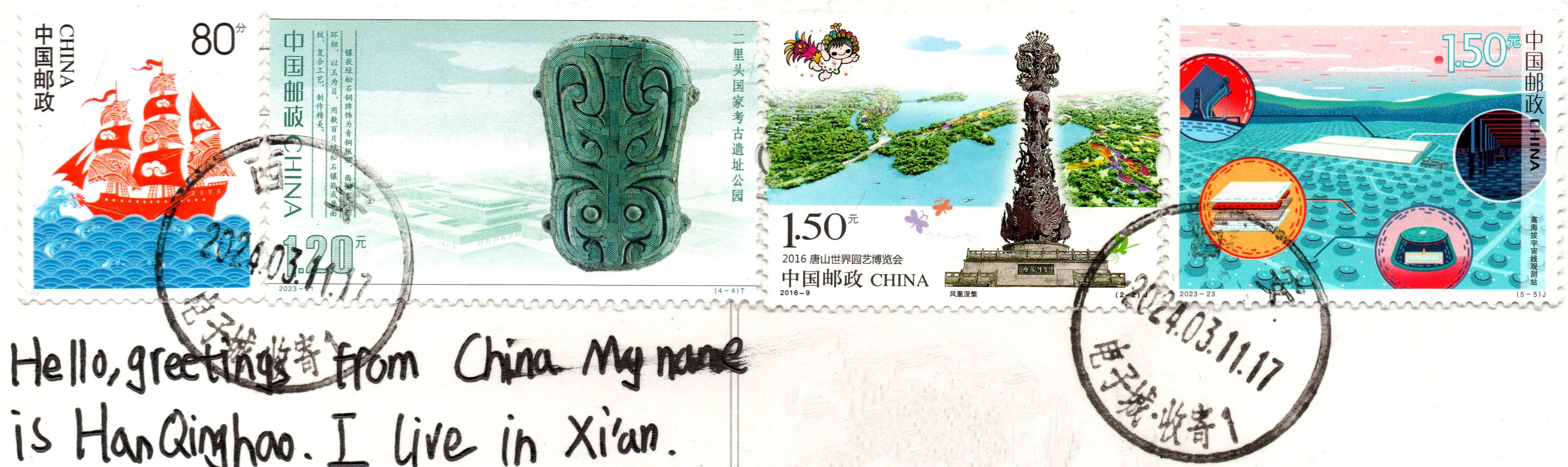
Thank you, Han Qinghao

万盛石林 - Wansheng Stone Forest - Steinwald in Wansheng


 万盛石林,位于中国四川省重庆市万盛经开区,是一处以石灰岩地貌为主体的自然景观。这片石林景区拥有独特的地质构造和丰富的生态资源,吸引了许多游客前来观赏。石林中错落有致的岩石形态各异,有的形似动物,有的像人物,有的宛如景点。在石林中,还分布着一些天坑、溶洞等地质奇观,增添了这片景区的神秘色彩。游客们可以在这里感受大自然的鬼斧神工,领略地质奇观带来的壮美景色,同时也可以进行登山、探险等户外活动。

Wansheng Stone Forest, located in Wansheng Economic Development Zone, Chongqing City, Sichuan Province, China, is a natural landscape dominated by limestone landforms. This stone forest scenic spot has unique geological structures and rich ecological resources, attracting many tourists to come and watch. The scattered rocks in the stone forest have different shapes, some resemble animals, some resemble people, and some resemble scenic spots. In the stone forest, there are also some geological wonders such as sinkholes and caves, which add to the mystery of this scenic spot. Visitors can feel the miraculous workmanship of nature and enjoy the magnificent scenery brought by geological wonders here. At the same time, they can also engage in outdoor activities such as mountain climbing and exploration.

 Der Wansheng-Steinwald befindet sich in der Wirtschaftsentwicklungszone Wansheng in der Stadt Chongqing in der Provinz Sichuan in China und ist eine natürliche Landschaft, die von Kalksteinlandschaften dominiert wird. Dieser malerische Ort im Steinwald verfügt über einzigartige geologische Strukturen und reiche ökologische Ressourcen und zieht viele Touristen zum Beobachten an. Die verstreuten Steine ​​im Steinwald haben unterschiedliche Formen, manche ähneln Tieren, manche ähneln Menschen und manche ähneln malerischen Orten. Im Steinwald gibt es auch einige geologische Wunder wie Dolinen und Höhlen, die das Geheimnis dieses malerischen Ortes noch verstärken. Besucher können die wundersame Arbeit der Natur spüren und die herrliche Landschaft genießen, die die geologischen Wunder hier bieten. Gleichzeitig können sie sich auch an Outdoor-Aktivitäten wie Bergsteigen und Erkundungen beteiligen.

Thank you, Muscle

厳島 - Itsukushima Shrine - Schrein-Insel


 厳島 は、日本の広島県に位置する小さな島で、正式には宮島(みやじま)とも呼ばれます。厳島は、日本三景のひとつに数えられる名勝地であり、特に厳島神社が有名です。厳島神社は、平安時代に建てられ、広島県の代表的な観光スポットとして知られています。厳島にはまた、美しい自然景観や歴史的建造物が豊富にあり、多くの観光客が訪れます。

 Itsukushima is a small island located in Hiroshima Prefecture, Japan, and is also officially known as Miyajima. Itsukushima is a scenic spot that is considered one of the three most scenic spots in Japan, and Itsukushima Shrine is especially famous. Itsukushima Shrine was built during the Heian period and is known as a representative tourist spot in Hiroshima Prefecture. Itsukushima is also home to many beautiful natural landscapes and historical buildings, which attract many tourists.

 Itsukushima ist eine kleine Insel in der Präfektur Hiroshima, Japan, und wird offiziell auch als Miyajima bezeichnet. Itsukushima ist ein malerischer Ort, der als einer der drei malerischsten Orte Japans gilt, und der Itsukushima-Schrein ist besonders berühmt. Der Itsukushima-Schrein wurde während der Heian-Zeit erbaut und gilt als repräsentativer Touristenort in der Präfektur Hiroshima. Außerdem beherbergt Itsukushima viele wunderschöne Naturlandschaften und historische Gebäude, die viele Touristen anziehen.

 Stamps:
Butterflies
Itsukushima Shrine

UNESCO #776:
Itsukushima Shinto Shrine

Thank you, Makiko

Gyöngyös


 Gyöngyös egy város Magyarországon, Heves megyében található. Magyarország egyik legnagyobb települése, és híres a gyöngyöspatai borairól. Emellett természeti szépségei is vonzzák a turistákat, például a Mátra-hegység közelében fekszik, így remek lehetőségeket kínál a túrázásra és a kirándulásra. Gyöngyösön található a Mátra Múzeum is, amely bemutatja a térség történelmét, kultúráját és természeti kincseit. A képen: A Szent Bertalan-templom a Belvárosban.

 Gyöngyös is a town in Heves County, Hungary. It is one of the largest settlements in Hungary and is famous for its wines from Gyöngyöspata. In addition, its natural beauty attracts tourists, for example its proximity to the Mátra Mountains offers great opportunities for hiking and excursions. Gyöngyös is also home to the Mátra Museum, which presents the history, culture and natural treasures of the region. Pictured: the Church of St. Bartholomew in the city centre.

Gyöngyös ist eine Stadt im Komitat Heves, Ungarn. Sie ist eine der größten Siedlungen Ungarns und berühmt für ihre Weine aus Gyöngyöspata. Darüber hinaus zieht die natürliche Schönheit der Stadt Touristen an, denn die Nähe zum Mátra-Gebirge bietet großartige Möglichkeiten zum Wandern und für Ausflüge. In Gyöngyös befindet sich auch das Mátra-Museum, in dem die Geschichte, die Kultur und die Naturschätze der Region präsentiert werden. Das Bild zeigt die St.-Bartholomäus-Kirche im Stadtzentrum.

Stamp:
Esterhazy Palace in Tata

Köszi szépen, Dodó :)

Suomi - Finland - Finnland


Markasta Euroon

Fran Mark till Euro

From Mark to Euro

Von der Mark zum Euro

Stamps:
Flagg of Finland
Finish lion

Thank you, Emmi

Historické Brno - Historic Brno - Historisches Brünn


Město Brno slaví 100 let od vzniku Velkého Brna. Dne 16. dubna 1919 byl odhlasován zákon "o sloučení sousedních obcí s Brnem". 

The city of Brno is celebrating 100 years since the founding of Greater Brno. On 16 April 1919, the law "on the merger of neighbouring municipalities with Brno" was voted.

Die Stadt Brünn feiert den 100. Jahrestag der Gründung des Großraums Brünn. Am 16. April 1919 wurde das Gesetz "über den Zusammenschluss der Nachbargemeinden mit Brünn" verabschiedet. 

Stamps:
Pilgrimage Church of the Virgin Mary
V. Vetvicka, Czech biologist

Danke, Milan

Wednesday, 27 March 2024

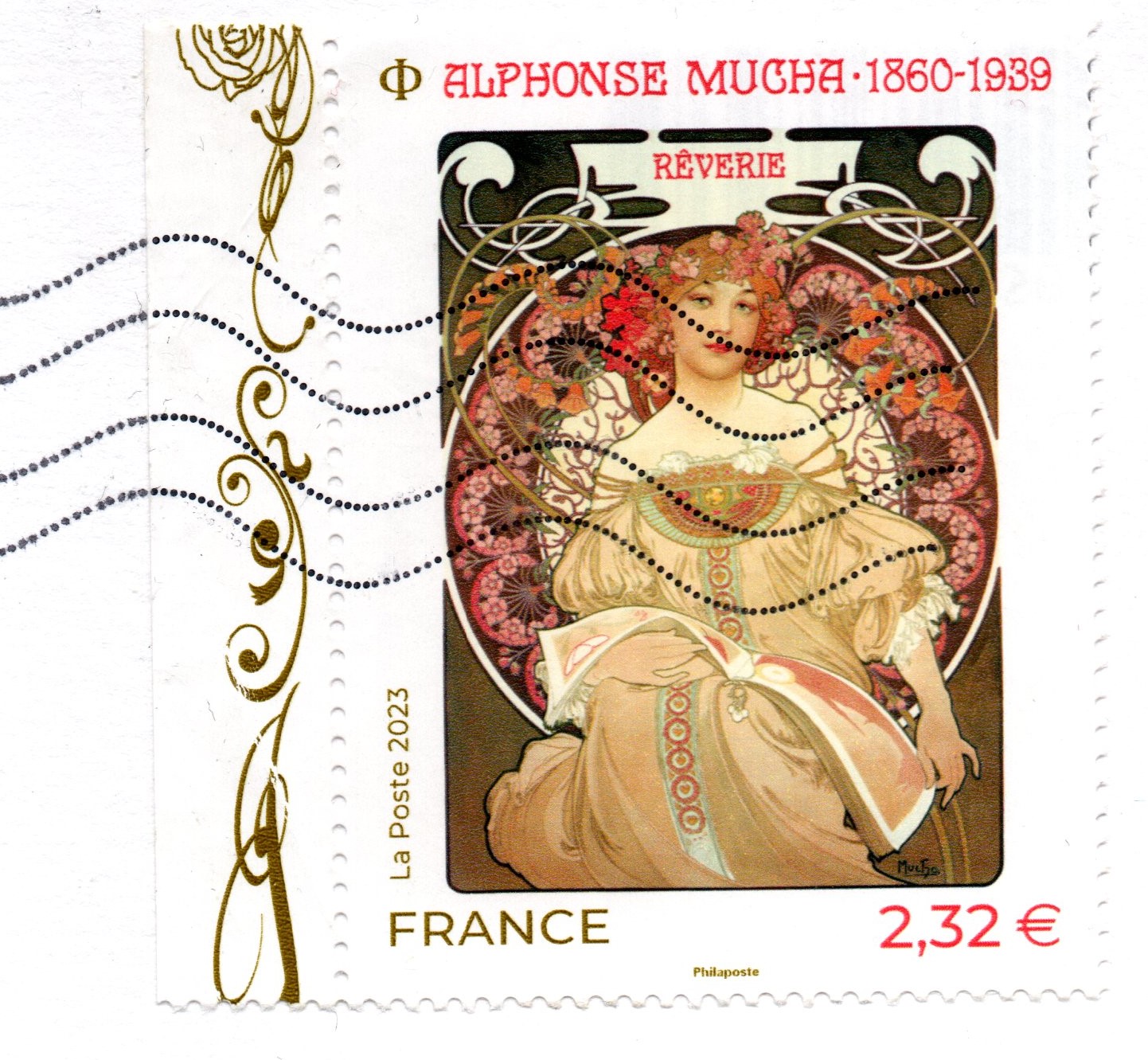
"Rêverie" (1897)


 "Reverie" je jeden z nejslavnějších obrazů Alphonse Marie Muchy, který vytvořil v roce 1897. Mucha, český umělec, byl hlavní postavou uměleckého hnutí známého jako Art Nouveau. "Reverie" zobrazuje elegantní ženu, která je typická pro Muchovu práci - s dlouhými vlnícími se vlasy a jemnými, křehkými rysy obličeje. Tato kresba je symbolická pro mnoho aspektů umění Muchy, včetně jeho důrazu na krásu, přírodu a ženskost.

"Rêverie" est une œuvre emblématique d'Alphonse Marie Mucha, réalisée en 1897. Mucha était un artiste tchèque de renom, principalement connu pour ses affiches publicitaires et ses œuvres d'art décoratif dans le style de l'Art nouveau. "Rêverie" représente une jeune femme, typique des femmes que Mucha aimait peindre, dans un état de rêverie. Elle est enveloppée dans des motifs floraux complexes, caractéristiques du style de l'Art nouveau. La femme est souvent interprétée comme une incarnation de la beauté idéale et de l'harmonie avec la nature, des thèmes récurrents dans l'œuvre de Mucha.

 "Rêverie" (engl. Dreaming) is an emblematic work by Alphonse Marie Mucha, created in 1897. Mucha was a renowned Czech artist, best known for his advertising posters and works of decorative art in the Art Nouveau style. "Rêverie" depicts a young woman, typical of the women Mucha liked to paint, in a state of reverie. She is wrapped in intricate floral motifs, characteristic of the Art Nouveau style. The woman is often interpreted as an embodiment of ideal beauty and harmony with nature, recurring themes in Mucha's work.

 
"Rêverie" (dt. Träumerei) ist ein ikonisches Werk von Alphonse Marie Mucha aus dem Jahr 1897. Mucha war ein bekannter tschechischer Künstler, der vor allem für seine Werbeplakate und dekorativen Kunstwerke im Stil des Jugendstils bekannt war. "Träumerei" stellt eine junge Frau, die typisch für die Frauen ist, die Mucha gerne malte, in einem verträumten Zustand dar. Sie ist in komplexe Blumenmuster gehüllt, die für den Jugendstil charakteristisch sind. Die Frau wird oft als Verkörperung der idealen Schönheit und der Harmonie mit der Natur interpretiert - Themen, die in Muchas Werk immer wieder auftauchen.

Stamp:
Reverie

Merci beaucoup, Anne

Sklenice piva v Brně - A glass of beer in Brno - Ein Glas Bier in Brünn


Stamps:
Sundial
Prof. F. Hamza, Czech doctor and writer

Danke, Milan ;)

金门妈祖像 - Kinmen Mazu Statue


金门妈祖像指的是位于中国福建省金门县的妈祖像,也称为金门妈祖庙。妈祖是中国民间信仰中的海神,被尊为渔民、船员和海上旅行者的保护神。金门妈祖像是为了纪念妈祖而建立的。这个庙宇通常是一个供奉妈祖的寺庙,供信徒祈福和朝拜。妈祖信仰在中国南部沿海地区非常流行,尤其在福建、台湾等地区,金门县作为台湾的一部分,也受到了妈祖信仰的影响。金门妈祖像是金门岛上的一个重要宗教场所和旅游景点,吸引了大量的信徒和游客前来参观。

The Kinmen Mazu Statue refers to the Mazu Statue located in Kinmen County, Fujian Province, China, also known as the Kinmen Mazu Temple. Mazu is the sea god in Chinese folk belief and is revered as the protector of fishermen, sailors and sea travelers. Kinmen Mazu Temple was built to commemorate Mazu. This temple is usually a temple dedicated to Mazu for believers to pray for and worship. Mazu belief is very popular in the southern coastal areas of China, especially in Fujian, Taiwan and other regions. Kinmen County, as a part of Taiwan, has also been influenced by Mazu belief. Kinmen Mazu Statue is an important religious site and tourist attraction on Kinmen Island, attracting a large number of believers and tourists.

Die Kinmen-Mazu-Statue bezieht sich auf die Mazu-Statue im Kreis Kinmen, Provinz Fujian, China, auch bekannt als Kinmen-Mazu-Tempel. Mazu ist im chinesischen Volksglauben der Meeresgott und wird als Beschützer von Fischern, Seeleuten und Seereisenden verehrt. Der Kinmen-Mazu-Tempel wurde zum Gedenken an Mazu erbaut. Dieser Tempel ist normalerweise Mazu gewidmet und dient den Gläubigen zum Beten und Anbeten. Der Mazu-Glaube ist in den südlichen Küstengebieten Chinas sehr beliebt, insbesondere in Fujian, Taiwan und anderen Regionen. Auch der Kreis Kinmen, der zu Taiwan gehört, wurde vom Mazu-Glauben beeinflusst. Die Kinmen-Mazu-Statue ist eine wichtige religiöse Stätte und Touristenattraktion auf der Insel Kinmen und zieht eine große Zahl von Gläubigen und Touristen an.

 Thank you, Castro

Paris


L'Arc de Triomphe, situé au centre de la Place Charles de Gaulle (anciennement Place de l'Étoile), est un monument historique qui a été construit pour célébrer les victoires militaires de la France, en particulier pendant les guerres napoléoniennes. Il est décoré de sculptures et de reliefs représentant des scènes de batailles importantes.

La Tour Eiffel, quant à elle, est une structure métallique emblématique de Paris, située sur le Champ de Mars, près de la Seine. Conçue par l'ingénieur Gustave Eiffel, elle a été initialement construite pour l'Exposition universelle de 1889 et devait être démontée après l'événement. Cependant, en raison de sa popularité croissante et de son utilité en tant qu'antenne de radiodiffusion, elle est devenue un monument permanent. La Tour Eiffel est célèbre pour son design unique et son observation deck, qui offre une vue imprenable sur la ville lumière.


The Arc de Triomphe, located in the centre of Place Charles de Gaulle (formerly Place de l'Étoile), is a historic monument that was built to celebrate France's military victories, particularly during the Napoleonic Wars. It is decorated with sculptures and reliefs depicting important battle scenes.

The Eiffel Tower, meanwhile, is a metal structure emblematic of Paris, located on the Champ de Mars near the Seine. Designed by engineer Gustave Eiffel, it was originally built for the 1889 Universal Exhibition and was due to be dismantled after the event. However, due to its growing popularity and its usefulness as a broadcasting aerial, it became a permanent monument. The Eiffel Tower is famous for its unique design and its observation deck, which offers a breathtaking view of the City of Light.


Der Arc de Triomphe, der sich in der Mitte des Place Charles de Gaulle (früher Place de l'Étoile) befindet, ist ein historisches Monument, das zur Feier der militärischen Siege Frankreichs, insbesondere während der Napoleonischen Kriege, errichtet wurde. Er ist mit Skulpturen und Reliefs geschmückt, die Szenen aus wichtigen Schlachten darstellen.

Der Eiffelturm hingegen ist eine symbolträchtige Metallkonstruktion in Paris, die sich auf dem Champ de Mars in der Nähe der Seine befindet. Der von dem Ingenieur Gustave Eiffel entworfene Turm wurde ursprünglich für die Weltausstellung 1889 gebaut und sollte nach der Veranstaltung wieder abgebaut werden. Aufgrund seiner wachsenden Beliebtheit und seiner Nützlichkeit als Rundfunkantenne wurde er jedoch zu einem dauerhaften Denkmal. Der Eiffelturm ist berühmt für sein einzigartiges Design und sein Observation Deck, das einen atemberaubenden Blick auf die Stadt der Lichter bietet.

Stamp:
Year of the Dragon 2024

Merci beaucoup, Anne

Monday, 18 March 2024

Гірськолижний курорт "Звенів" - Горнолыжный курорт "Звенив" - "Zveniv" ski resort - Skigebiet "Zveniv"


 Орявчик-Звенів — невеликий гірськолижний курорт в українських Карпатах, який знаходиться у Сколівському районі Львівської області — село Орявчик.

 Орявчик-Звенив - небольшой горнолыжный курорт в украинских Карпатах, который находится в Сколевском районе Львовской области - село Орявчик.

 Oryavchyk-Zveniv is a small ski resort in the Ukrainian Carpathians, located in the village of Oryavchyk, Skole district, Lviv region.

Orjawtschyk-Zweniw ist ein kleines Skigebiet in den ukrainischen Karpaten, das sich im Dorf Orjawtschyk, Bezirk Skole, Region Lwiw, befindet.

 Stamp:
145y. Universal Postal Union

Thank you, Oksana

La France - France - Frankreich


Stamps:
Rainbow in England
Rainbow in Germany

Merci, Jeanne

Saturday, 16 March 2024

750 Jahre Berlin - 750 years of Berlin


Der Berliner Friedrichstadt-Palast, oft einfach als Friedrichstadt-Palast bezeichnet, ist ein renommiertes Theater- und Unterhaltungszentrum im Bezirk Mitte von Berlin, Deutschland. Er hat eine reiche Geschichte, die bis ins 19. Jahrhundert zurückreicht, und wurde im Laufe der Jahre mehrfach renoviert und umgebaut.

Seit seiner Eröffnung im Jahr 1919 ist der Friedrichstadt-Palast eine bedeutende kulturelle Einrichtung in Berlin, in der eine Vielzahl von Aufführungen stattfinden, von Kabarett- und Revuevorstellungen bis hin zu Musicals und anderen Theaterproduktionen. Er hat eine herausragende Rolle in der deutschen Unterhaltungsgeschichte gespielt und zieht ein nationales und internationales Publikum an.

The Berlin Friedrichstadt-Palast, often simply referred to as Friedrichstadt-Palast, is a renowned theater and entertainment venue located in the Mitte district of Berlin, Germany. It has a rich history dating back to the 19th century and has undergone various renovations and reconstructions over the years.

Originally opened in 1919, Friedrichstadt-Palast has been a significant cultural institution in Berlin, hosting a variety of performances ranging from cabaret and revue shows to musicals and other theatrical productions. It has played a prominent role in German entertainment history, attracting both national and international audiences.

Danke, Manfred